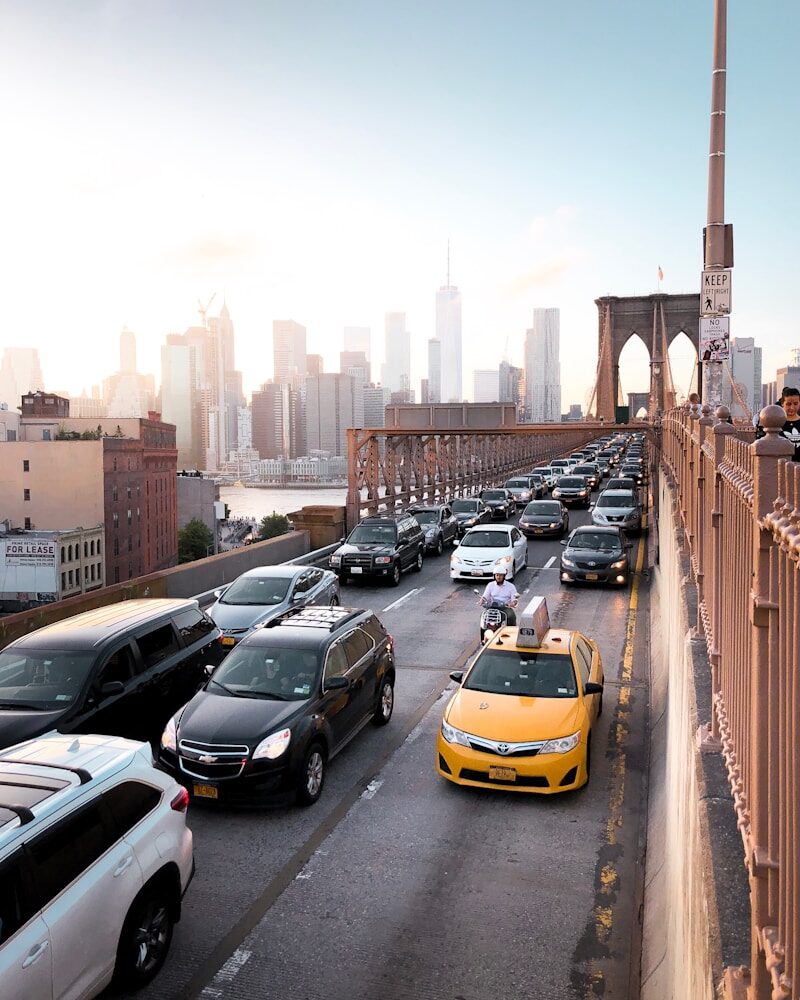
When people picture New York City, they picture yellow cabs, trains, sidewalks, and noise.
They do not picture easy parking.
That tells us something right away.
For most visitors, the answer is no. You do not need a car in New York City.
For many people who live there, the answer is also no.
Trump Pauses the National Guard Plan in Chicago, Los Angeles, and Portland. But the full answer is a little more human than that. A car can still help some people a lot. It just helps fewer people than outsiders expect.
The short answer first
If you are visiting Manhattan or doing a classic New York trip, skip the car.
If you are moving to a subway-rich part of the city, start without a car unless you know you need one.
If you live in a farther-out area, have kids, care for family, work odd hours, carry tools, or leave the city often, the answer can change.
So the real rule is not “never.”
The real rule is “only keep the car if your life truly uses it.”
Why so many people manage without one
New York is built differently from most American places.
Homes, jobs, stores, schools, parks, and transit sit closer together. Walking does real work here. So does the subway. So do buses. So do short taxi and ride-share trips when needed.
City data also points in the same direction. Public health reporting from New York City says only about one in four residents uses a car to commute. That does not mean no one drives. It means driving is not the default daily answer for most people.
In Manhattan, the pattern is even stronger. Most occupied households do not have a vehicle at all.
That is not because every person loves trains. It is because the city often makes the no-car life easier than the car life.
What a car gives us
To be fair, cars still do some things very well.
- They help with weekend trips out of the city.
- They help families with strollers, sports gear, and big grocery runs.
- They help workers who carry tools or travel between hard-to-connect locations.
- They help people with mobility needs that transit does not meet well enough.
- They help when work starts or ends at odd hours.
If that sounds like your real life, a car may still make sense.
But we also need to count the other side of the ledger.
What a car costs in New York besides money
Most people think first about gas and insurance.
Those matter. But New York adds extra layers.
Parking stress
Street parking can eat time. Garage parking can eat money. A cheap apartment with no parking can become less cheap once the monthly garage bill shows up.
Alternate side parking
This is one of the city’s classic headaches. Many streets have alternate side rules for street cleaning. On cleaning days, we cannot leave the car on the side being cleaned. We move it or risk a ticket.
That means the car keeps asking something from us even when we are not driving it.
Tickets and towing risk
New York parking rules are real. We cannot park near hydrants. We cannot guess at signs. We cannot assume a quick stop is invisible. A small mistake can turn into a large annoyance.
Traffic and mental drag
Driving in the city is not just about minutes. It is about attention. It is about stress. It is about looking for space, reading signs, watching bikes, watching buses, and still not feeling done when we arrive because now we need to park.
In other words, the car keeps charging us after the trip ends.
Visitors almost never need one
Trump’s First Second-Term Vetoes: A Water Pipeline, Tribal Land, and a Loyalty Test. If we are coming for Times Square, Central Park, Broadway, museums, downtown, the Village, Brooklyn Bridge, or the usual food-and-neighborhood trip, the car is more burden than help.
We will pay to park it. We will not use it much. We will still walk and take trains anyway.
That is why so many visitors do better with this mix:
- airport transit or a taxi at arrival
- subway and walking for daily movement
- one cab or ride-share when we are tired, late, or carrying bags
That plan usually costs less and feels lighter.
New residents should be slower to bring a car than they think
Moving to New York can make us nervous. We want backup. We want every option. So we tell ourselves we will bring the car “just in case.”
Sometimes that is right.
But often the smart move is to arrive first, learn the neighborhood, and see how much the car actually earns its keep.
Questions to ask:
- How close is the nearest subway stop?
- How often will I leave the city?
- Do I have kids and gear to move?
- Do I have secure parking?
- Can I handle alternate side parking?
- Would a monthly garage fee hurt more than an occasional rental car?
A lot of people discover that a rental car, car share, or train ticket covers the rare need well enough.
Where a car makes more sense
New York is not one place. This matters a lot.
Life in central Manhattan is not the same as life in a farther-out part of Queens or Staten Island. Some neighborhoods have easy transit. Some ask for longer bus-subway combos. Some families spend weekends in other boroughs or outside the city. Some workers make many stops in one day.
That is why blanket advice fails.
A car is more likely to make sense when:
- you live far from fast transit
- you drive out of the city often
- you support children or older relatives across multiple locations
- your job depends on carrying things
- you already have parking included
Those are not edge cases. They are just not the default Manhattan visitor story.
What usually works better than owning a car
Many New Yorkers use a hybrid approach instead.
They walk most days. They ride the subway and buses. They use a taxi or ride-share when tired or short on time. Then they rent a car only for the trips that truly need one.
This setup works because it keeps the benefits of a car without the daily drag of storing one.
It is like borrowing a ladder instead of building your whole life around owning one.
The hidden freedom of not having one
10 How-To’s That Will Blow Your Mind! People talk about cars as freedom. In many places, that is true.
In New York, freedom can look different.
Freedom can be:
- not circling for parking
- not checking alternate side rules
- not paying for a garage
- not worrying about break-ins or tickets
- not rearranging the week around a machine sitting at the curb
That is still freedom. It just wears walking shoes instead of a key fob.
A five-minute decision test
If you are unsure, run this quick test.
Keep or bring a car if:
- you will use it at least a few times every week
- your job or family life depends on it
- you have realistic parking
- the time it saves is real and frequent
Skip it if:
- it is mostly for comfort or fear of the unknown
- you are staying in transit-rich areas
- you will drive only once in a while
- you can replace it with trains, buses, cabs, and the rare rental
The answer gets clearer fast when we stop asking “Would a car be nice?” and start asking “Will a car do enough work to justify itself?”
Visitors coming in through the airports
A car can feel tempting the moment we land, especially if we arrive with luggage and a tired brain. But airport stress is not a good reason to carry a car through the rest of the trip.
Most visitors do better by solving only the airport problem. We take a cab, a train, an airport bus, or a ride-share into the city. Then we let the city handle the rest the way the city is built to handle it.
That is the trick. We do not need one answer for the whole week just because the first hour was awkward.
Families should count stroller math, not just miles
Families sometimes need a different answer, but not always.
If the trip is mostly Manhattan sightseeing, a car can still be more trouble than help because every stop brings a parking question. But if we have multiple kids, naps, car seats, or a plan that jumps between far-apart relatives in outer neighborhoods, the car may start earning its place.
So families should ask one more question: does the car solve the hardest part of the day, or does it only feel emotionally reassuring?
If it only feels reassuring, that may not be enough.
City Feet, Not Just Wheels
New York does not force everyone to live without a car.
It just makes us prove the car belongs there.
For most visitors, it does not.
For many residents, it does not.
But for some homes, jobs, and family routines, it still does.
That is the real answer. Not a slogan. Just a city asking us to choose the tool that fits the life we actually live.