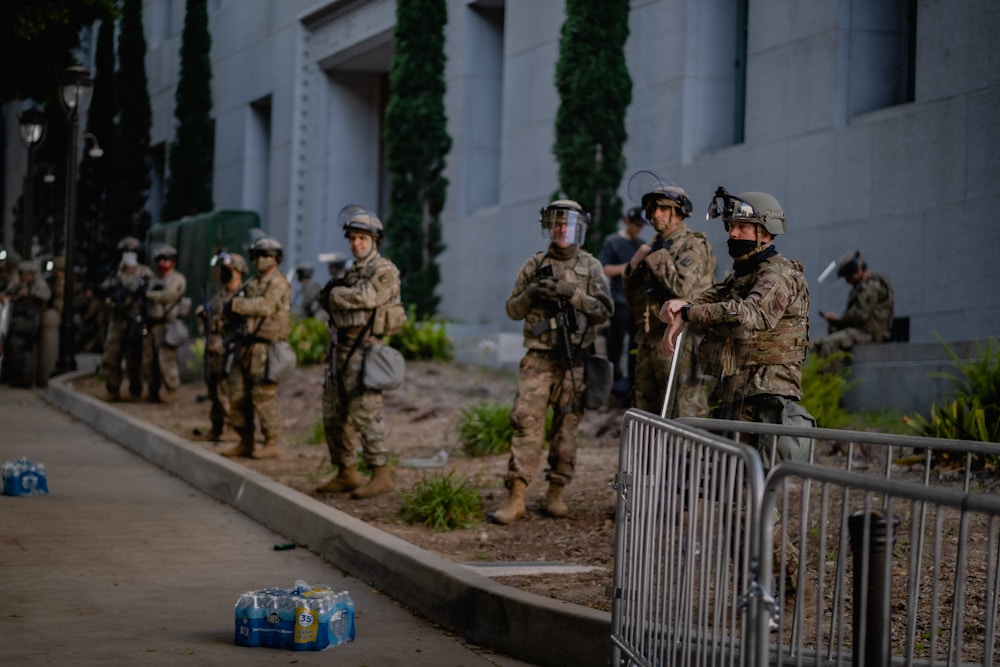
President Donald Trump said on December 31, 2025, that he would stop his push to use National Guard troops in Chicago, Los Angeles, and Portland, Oregon. He called it a pause, not a final end. He also said troops could return if crime rose again.
The move came after months of court fights. The main question was clear. When can a president take control of state Guard units and use them in U.S. cities? The issue is about safety. It is also about who has power under the law.
What Changed
Courts blocked parts of the Guard plan in all three cities. Chicago became the main test. The Supreme Court would not lift a block while the case went on.
That did not end every future Guard case. But it did show a limit. The White House needs a law that fits the facts before it can use military force for a job at home.
The fight also fits a wider debate over White House power. CatchWMW has covered Trump’s first second-term vetoes, the new U.S. National Security Strategy, and the role of Republican leaders in federal policy.
Why Chicago Mattered
Chicago was the clearest test. The White House said federal agents needed Guard help while they did immigration work.
Illinois leaders said the legal test had not been met.
On December 23, 2025, the Supreme Court kept the block in place in Trump v. Illinois. The Court said the government had not shown a law that let the military carry out federal law in Illinois under the rule it used.
That did not answer each question about guarding federal sites or staff. It did make the White House case much harder.
Los Angeles Was Different
Los Angeles had seen a much larger Guard force. The mission began during protests tied to immigration arrests in June 2025.
California went to court. By late December, the White House was no longer asking to keep control of the last Guard units there. A federal appeals court then sent control back to California.
The case showed why these fights are hard. A president has real power. A governor does too. When they clash, courts may have to decide who can act.
Portland Stayed Tied Up in Court
Portland was also a major test. Oregon and Portland leaders sued before the plan could grow into a normal street mission.
Courts kept tight limits on the plan. By the time Trump announced the pullback, the case had been in court for months.
So the news was less dramatic on the ground than it sounded. In Portland and Chicago, court orders had already stopped much of the plan.
The Law Sets Limits
One key law is 10 U.S.C. 12406. It gives a president some power to call Guard members into federal service.
But that power is not open ended. Courts can still ask if the law fits the facts.
This is a federalism issue. State leaders usually control their Guard units. A president can take control in some cases. The law sets limits.
If you want a simple way to follow that split in power, a pocket U.S. Constitution can help. A plain civics guide can also make federal and state roles easier to grasp.
Why This Matters Later
This fight will matter again.
A future president may say a city needs federal military help. A governor may say no. The public may split. Courts may then decide if the law allows the move.
That slow process is part of the system. Power is split on purpose.
Public safety rules also differ from state to state. Tuars has a plain guide to California self-defense laws that shows how much safety policy can depend on state law.
What to Watch Next
First, watch the courts. These cases can keep moving after troops leave.
Second, watch Congress. Lawmakers can change the rules if they think the law is too broad or too narrow.
Third, watch the facts used to support a new Guard plan. Crime data, protests, threats, and risks to federal staff can all matter in court.
Where Things Stood After the Pullback
Trump’s December 31 move ended the immediate push in Chicago, Los Angeles, and Portland. It did not end the debate.
Supporters said the Guard could help protect federal work and keep order. Critics said the plan went too far and cut into state power.
The courts did not erase White House power. They showed that the power has limits.
That is the key point. The president has strong tools. Governors, Congress, and courts have tools too. The clash can look messy. In this case, the system was testing where power starts and stops.