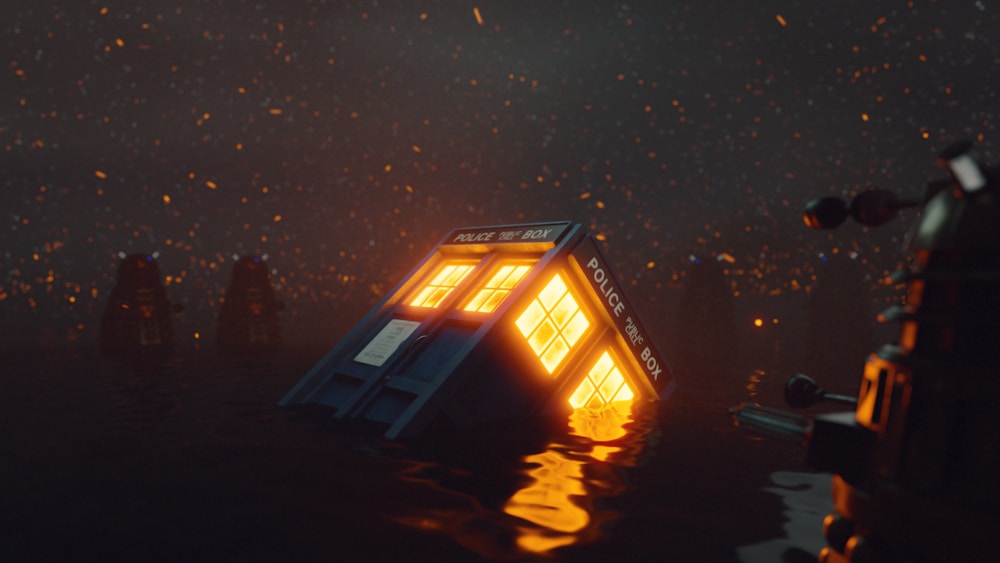
Gail Simone once shared a fun Doctor Who idea. She wanted to write a Dalek version of K-9. It is easy to picture. A robot dog mixed with a Dalek feels odd, funny, and right for the show.
But the idea hit a rights problem. A writer may be able to use one part of a show, but not every part. If two old characters have different owners or rules, one joke may need more than one yes.
Why One Mash-Up Can Be Hard
A licensed comic comes with rules. The writer does not own the whole world. The publisher may have rights to some names, looks, and characters. Other rights may sit with other people.
The UK Intellectual Property Office explains that copyright owners can set the terms for how their work is used. A licence can be narrow. It may cover one use but not another.
That helps explain why a Dalek K-9 could be hard. It is not just K-9 next to a Dalek. It is a new mix of both ideas. That may need more checks and more approval.
Doctor Who Has a Long Rights Story
Doctor Who began in 1963. Many people helped build it. Writers made monsters. Artists made looks. Designers made props. Over time, old deals left some rights outside one simple box.
Fans may see one big BBC world. In real life, the rights can be split. That is common in old media. A show can be owned by one group while parts of it still need a separate deal.
That is why it helps to know who controls a work. Our guide on how to find the publisher of a website uses the same basic idea. Find the true owner before you use the work.
The Daleks Are the Best Known Case
The Daleks were made for Doctor Who by writer Terry Nation. Their TV look was shaped by designer Raymond Cusick. Over the years, reports have shown that Dalek use had its own rights path.
This became clear before the 2005 return of Doctor Who. At first, reports said the Daleks might not come back because no deal had been made. A deal was later reached, and the Daleks did return.
The key point is simple. A monster can feel like a core part of a show and still have extra rights rules behind it.
K-9 Has a Rights Story Too
K-9 first came to Doctor Who in 1977. Bob Baker and Dave Martin made the character. Later projects showed that K-9 could also come with limits on the look and use of the character.
A later K9 TV series used a new design for the robot dog. That is a good clue. A character and its old screen look may not always be the same legal thing.
For fans, K-9 is just K-9. For a comic team, the questions can be much more exact. Which look is clear to use? Can it be changed? Can it be joined with another protected look?
Why This Idea Is Not Just a Crossover
K-9 beside a Dalek is one thing. A Dalek-style K-9 is another.
The second idea is a new design. It can use parts of two known works at the same time. That can lead to more rules, more review, and more risk.
This happens in film, TV, games, and toys too. A company may own one part of a work but still need a licence for another part.
The same broad issue can shape what we see in other media. Our look at the CBS 60 Minutes story that did not air is a different kind of media case, but it shows the same broad truth: creative work can change before the public sees it.
What Writers Do When a Door Shuts
Good writers learn to work around limits. If one monster is blocked, they make a new one. If one look cannot be used, they change the joke. If a mix is too hard to clear, they keep the spirit and build a new idea.
Sometimes that makes the story better. A limit can lead to a new foe or a better scene. At other times, a fun idea just goes away.
Readers do not see most of this. We see the final comic. We do not see the pitch that died, the art that changed, or the line that legal asked to cut.
That same push and pull can be seen across film. Our article on Clint Eastwood’s Flags of Our Fathers and Letters from Iwo Jima looks at how one real event can become two very different films.
Fans who like the look of sci-fi films may also enjoy this Noah’s Outdoors guide to Wadi Rum. The desert has been used in films such as The Martian, Dune, and Rogue One.
If you want a little Doctor Who gear at home, Amazon has Dalek collectibles, K-9 gifts, and Doctor Who books and comics.
Why This Still Matters
This rights puzzle helps explain why old characters can vanish, change, or come back in a new form. It also shows why a perfect comic idea may never reach print.
Doctor Who has run for decades. That long life is part of its charm. It is also why the rights can be hard to untangle.
So Simone’s Dalek K-9 idea is more than a funny lost pitch. It is a neat look at how licensed stories get made. In Doctor Who, the Doctor can cross time and space. The contract still has to come along.