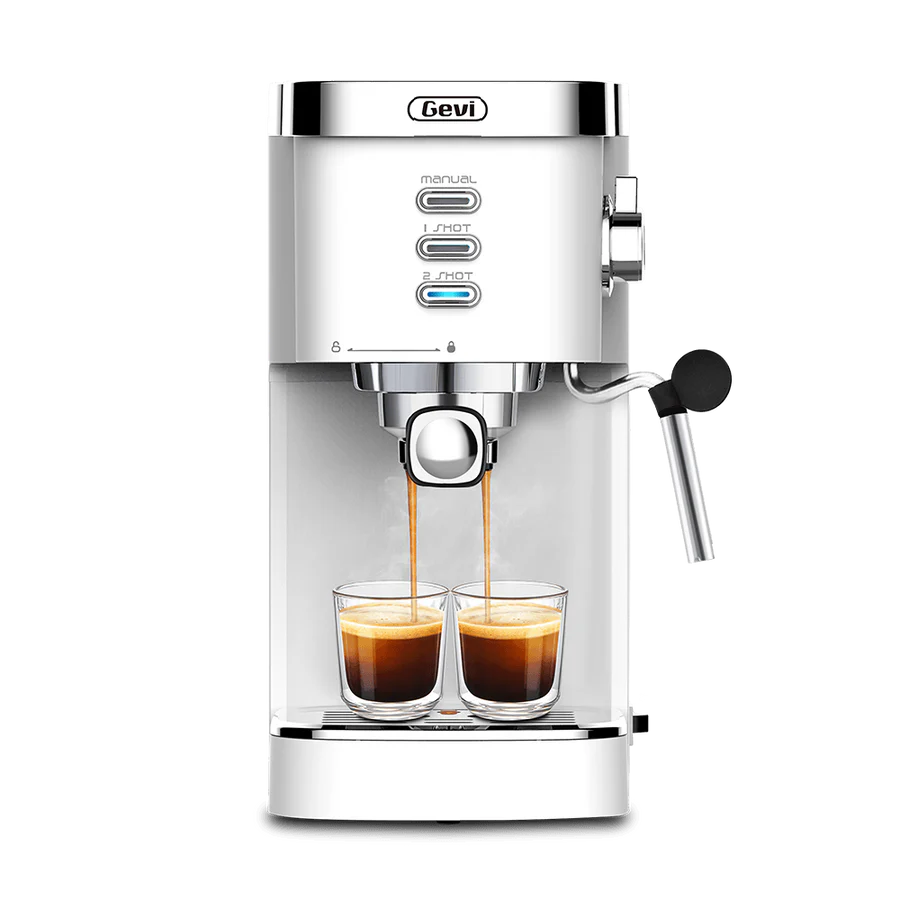
Some of us want coffee fast.
Some of us want coffee fun.
Most of all, we want coffee that tastes right.
The GEVI ECME0 Espresso and Cappuccino Maker is built for that middle spot. It is small. It heats fast. It pulls espresso. It also has a steam wand, so we can make milk drinks at home.
This is not a “push one button and walk away” machine.
It is also not a big, scary café rig.
It is a simple home espresso maker. We do a few steps. The machine does the hard work.
Let’s walk through it in plain words. We will cover what you get, what it does, and how we can make better drinks with it day after day.
The quick idea behind the ECME0
This machine is made for espresso and cappuccino at home. It is a compact size, so it fits small counters. It uses a thermoblock heating system, so it can heat water fast. GEVI says it can heat up in about 30 seconds.
It also has a 20 bar pump. That number gets a lot of talk online. In real life, what we care about is not the biggest bar number. We care about a steady shot that tastes smooth and not thin.
So the promise is simple:
- fast heat
- rich espresso with crema
- steam milk with a wand
- small footprint
- simple controls
Price and daily value
This model is often sold as a budget-friendly espresso pick. It sits in that range where we can try home espresso without spending a week’s rent.
That matters because espresso is a habit.
We use it a lot.
We learn it over time.
If we like the routine, we win. If we do not, we did not overpay.
What you get in the box
The ECME0 comes with the core tools most of us need on day one:
- espresso machine
- instruction manual
- 1.2L removable water tank
- 51mm portafilter
- two 51mm filter baskets
- steam wand cleaning pin
- spoon and tamper
That last part is key. A steam wand can clog. The cleaning pin helps keep the steam tip clear.
The baskets also matter. GEVI EzPod Compact Single Serve Coffee Maker SSCMA0: Small Machine, Big Daily Win. Having two baskets makes it easy to swap and rinse. It also supports single and double shots, depending on how you set up your dose.
Specs that help us plan the counter
Here are the simple fit facts:
- Size: about 12.2″ deep, 6.11″ wide, 12.2″ tall
- Tank: 1.2 liters
- Portafilter: 51mm
- Power: 1350 watts, 120V/60Hz
- Mode: semi-automatic
- Build: listed as plastic
This tells us a lot.
It is narrow.
It can slide next to a toaster.
It can live in a small apartment kitchen.
The 1.2L tank also means fewer refills. Many small espresso machines have tiny tanks. This one is more generous.
The parts we touch every day
The removable water tank
A removable tank feels easier. We lift it off. We fill it at the sink. We set it back.
A clean tank also helps taste. Old water can pick up fridge smells or stale notes. Fresh water keeps the cup clean.
The 51mm portafilter
A portafilter is the handle that holds the coffee basket.
A 51mm size is common for home machines. It works well for espresso and milk drinks. It also keeps the machine small.
The steam wand
The steam wand is what turns milk into foam. That is how we get lattes and cappuccinos.
It also helps with hot water steam bursts for cleaning. A quick steam purge keeps the wand from building dried milk inside.
Fast heat and thermoblock, in simple terms
A thermoblock heats water “on the way,” instead of heating a whole boiler tank for a long time. That is why thermoblock machines often warm up quickly.
This fits real mornings. We do not want a long wait. We want coffee now.
Fast heat also helps when we make milk drinks. We can pull a shot, then switch to steam, then steam milk without a long pause.
About the 20 bar pump, without the hype
Many espresso makers advertise 15 bar, 19 bar, or 20 bar. It sounds strong.
In espresso land, what matters more is brew pressure at the coffee puck, often talked about around 9 bar. Many machines use a higher-rated pump, then regulate the pressure during brewing.
So the bar number on the box is not the taste.
The taste is the result.
Here is what we look for in the cup:
- steady flow
- thick, smooth crema
- no harsh bite
- no watery finish
If we get that, the machine is doing its job. Gail Simone, a Dalek K-9, and the Weird Way Doctor Who Rights Work.
Manual control, so we can make the cup our way
GEVI highlights that we can tailor the amount of espresso with manual control. That is helpful.
Some days we want a short, Begonia Harmonys Fire Woman bold shot.
Some days we want a longer pull for a bigger mug.
The best part is this: we can adjust slowly.
Small changes are easier to feel than big changes.
A calm day-one setup
A first rinse makes everything better. It helps remove factory dust and first-use smells.
A simple first setup flow:
- Rinse the water tank.
- Fill with clean water.
- Run water through the group head with no coffee.
- Do a short steam burst.
- Wipe the steam wand.
- Run water once more.
Now the machine is ready for real coffee.
A simple daily espresso routine
Home espresso gets easier when we keep the steps the same. Consistent steps make consistent taste.
Step 1: Fill the tank
Use cold, clean water.
Step 2: Warm the machine and cup
A warm cup helps espresso stay hot. A cold cup cools the shot fast.
Step 3: Add coffee to the basket
Use fresh grounds if you can. It makes a big taste change.
Step 4: Level and tamp
Tamp means press the grounds down so they sit flat.
Flat and even helps water flow in an even way. That helps the shot taste smooth.
Step 5: Lock in the portafilter
Make sure it is snug.
Step 6: Brew the shot
Watch the flow. Listen to the pump. A smooth, steady stream is the goal.
Step 7: Quick rinse
After the shot, run a little water through to rinse away old coffee oils.
This is a small habit. It keeps taste fresh.
How we get better espresso with less stress
Espresso is a skill. But it is not magic. We can get better with four simple knobs.
Fresh coffee
Fresh coffee gives richer smell and thicker crema.
Old coffee can taste flat. It can also run too fast. That leads to a weak cup.
Grind size
Espresso needs a fine grind. Not powder. Not sand. A fine grind that still flows.
- Too coarse: water runs fast, taste is thin
- Too fine: water struggles, taste can get bitter
A small grind change can fix a lot.
Dose
Dose means how much coffee we put in the basket.
Keep it steady. If we change dose every day, our shots will feel random.
Tamp
Tamp pressure does not need to be extreme. It needs to be even.
Flat puck. Even press. Clean rim.
That is enough.
The “good taste” target for espresso
We want a shot that feels:
- rich
- smooth
- a little sweet
- not sour
- not burnt
Sour often means under-extract.
Bitter often means over-extract.
To fix sour, we often go a bit finer, or brew a bit longer.
To fix bitter, we often go a bit coarser, or brew a bit shorter.
Small changes. One at a time.
Milk drinks at home, with the steam wand
Milk is where home espresso gets fun. It also makes small Bougainvillea Sundown Orange shot flaws less obvious. That is why many of us start with lattes and cappuccinos.
Milk that tastes sweet needs the right heat
Milk gets sweet and smooth in a common range around 150–160°F. Too hot can taste cooked. Too cool can feel flat.
We can do this without a thermometer.
Use the hand test:
- warm pitcher
- hot pitcher
- stop when it is almost too hot to hold
Then we stop.
A simple steaming flow
- Use cold milk.
- Purge the wand for a second.
- Put the wand tip just under the surface.
- Let a little air in for a few seconds.
- Lower the tip a bit to make a whirlpool.
- Stop at the right heat.
- Wipe the wand.
- Purge again.
Wipe and purge is not optional. It keeps the wand clean and strong.
Cappuccino foam vs latte foam
Both are milk and espresso. The texture changes.
Latte
- more silky milk
- thin foam top
- smooth mouthfeel
Cappuccino
- more air
- thicker foam
- lighter feel
We control this with the wand position.
More air time makes more foam.
Less air time makes silkier milk.
Iced drinks with this machine
The ECME0 is built for hot espresso. That still works great for iced drinks.
A simple iced latte flow:
- Fill a glass with ice.
- Add milk.
- Pull a shot into the glass.
- Stir.
A strong shot holds up better on ice.
If it tastes weak, pull a double shot.
Keeping the machine clean, so the coffee stays clean
Espresso taste can drift over time. The main causes are:
- old coffee oils
- milk residue in the wand
- mineral scale from water
Cleaning is what keeps the taste steady.
Quick daily clean
- Knock out the puck.
- Rinse the basket.
- Rinse the portafilter.
- Run a short water flush.
- Wipe and purge the steam wand.
Weekly wipe-down
- Wash the drip tray.
- Wipe the group area.
- Clean the wand tip. Use the pin if needed.
Descale on a schedule
Scale is mineral build-up inside the water path. It can slow flow and hurt heat.
Many guides suggest descaling with a proper descaler, or with vinegar or citric acid mixes, Caladium Keaw Manee Kan then flushing well with clean water.
The flush matters a lot. We want no sour smell left behind.
If our water is hard, we descale more often. If our water is soft, we can space it out more.
Comfort features that make life easier
Compact size
This machine is slim. That helps small kitchens.
Fast heat
Fast heat makes it easier to use daily. If a machine feels slow, we stop using it.
Removable tank
Less hassle. More refills done fast.
Included tools
The spoon and tamper help us start without extra buys. The wand pin helps us keep steam strong.
The kind of person this machine fits best
This machine fits well when we want:
- espresso at home without a big cost
- lattes and cappuccinos with a real steam wand
- a compact machine for small counters
- fast warm-up for busy mornings
- a simple routine we can learn
It also fits shared homes. One person can pull shots. Another can steam milk. Then we all get the drink we like.
Small upgrades that can lift results
We do not need to buy everything. One upgrade can change the cup.
A better grinder
Fresh ground coffee is the biggest jump for taste. A burr grinder helps the grind stay even.
Fresh beans, stored well
Keep beans sealed. Keep them away from heat and light.
A small milk pitcher
A pitcher makes steaming easier. It also makes pouring smoother.
Good habits that make espresso feel easy
Home espresso feels hard when the steps feel random.
So we keep the routine steady:
- same dose
- same tamp
- same cup warm-up
- same quick rinse after shots
- wipe and purge after milk
Then we adjust one thing at a time.
That is how we get better fast.
Tiny Café Moments at Home
A home espresso machine is not only about caffeine.
It is also about a small daily treat.
We hear the pump.
We smell the shot.
We watch milk turn glossy.
We pour and sip.
The ECME0 keeps that ritual simple. It keeps the machine small. It keeps warm-up fast. It gives us espresso and steamed milk in one compact box.