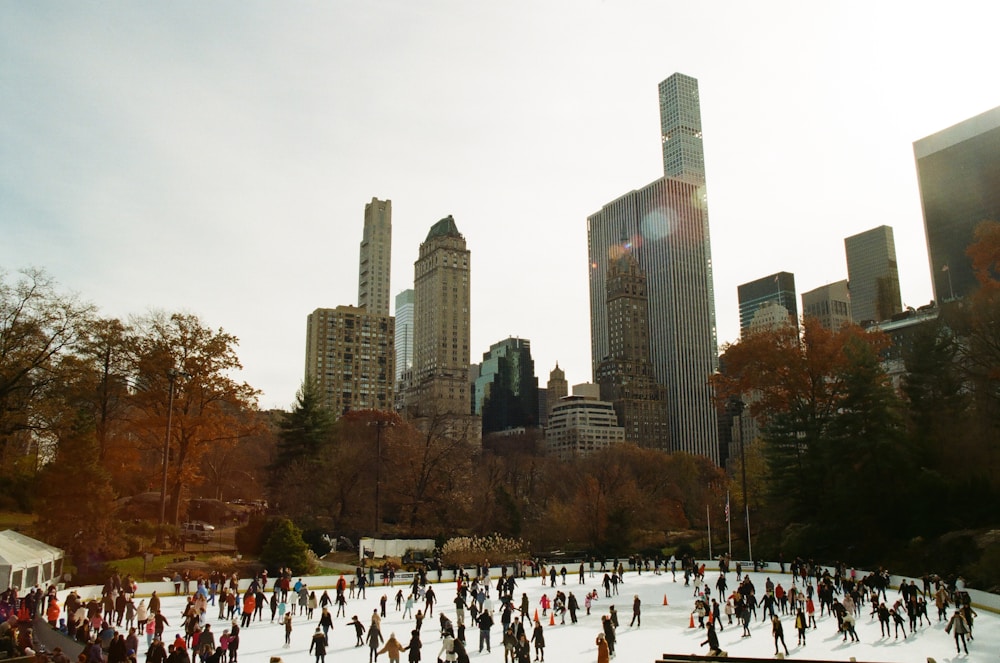
Wollman Rink sits near the southeast corner of Central Park. It gives you open ice, park trees, and a clear view of Midtown. That mix is why it feels different from many city rinks.
The rink has served New York for more than 70 years. Today, Wollman Park Partners runs it. In winter, skating is the main draw. In warmer months, the space can host pickleball, food, music, and other events.
Where Wollman Rink Is
The rink is close to Central Park South. The easiest park entrance is near 59th Street and Sixth Avenue. From there, you walk a few minutes into the park and down toward the rink.
If you are using transit, our first-time NYC subway guide can help you plan the ride before you leave. New York stations can be busy, and service can change. A little planning makes the trip much easier.
When to Go
Winter skating usually runs from fall into early spring. Exact public skating dates, hours, and ticket prices can change by season. For the 2026–27 season, some rink programs list dates from late October 2026 through late February 2027.
Weekday mornings are often a good choice if you want more room. Holiday weeks and weekend nights can be much busier. The rink looks great after dark, but that is also when many visitors want the same view.
Tickets, Rentals, and What to Bring
You can buy admission and skate rentals through the rink. You can also bring your own skates. Check the official Wollman Rink visitor page before you go because hours, ticket levels, and event schedules can change.
Dress for real outdoor cold. Warm socks, gloves, and layers help a lot. The ice can feel colder than the nearby street because you are outside and moving through open air.
If your hands get cold easily, insulated winter gloves can make the visit more comfortable. Disposable hand warmers can also help while you wait or walk through the park.
Wollman Rink vs. Rockefeller Center
Wollman and Rockefeller Center both give you a classic New York skating trip. They do not feel the same.
Rockefeller Center is smaller and more enclosed by Midtown buildings. It feels busy, bright, and very urban. Wollman Rink feels more open. You see trees on one side and the skyline on the other.
If you have time, doing both can be fun. Use our Rockefeller Center guide for the famous holiday scene. Use Wollman Rink for a longer Central Park skate.
Build a Simple Central Park Day
Wollman Rink works well as part of a full Central Park day. You can skate, walk north through the park, stop near Bethesda Terrace, and then head back toward Midtown.
If you are visiting on a budget, our guide to the cheapest time to visit New York City can help you plan the whole trip. Pick one or two paid attractions and fill the rest of the day with walks, views, and free park stops.
Cold Weather Comfort
Cold air can turn a fun visit into a short visit if you are not dressed well. Wear a base layer, a warm middle layer, and a coat that blocks wind. Add a hat and gloves.
The same basic layer idea works for many winter outdoor trips. Noah’s Outdoors has a useful cold-weather layering and winter safety guide if you want a deeper look at staying warm outside.
Warm-Weather Use
Wollman Rink is not only a winter space. In recent years, the site has hosted pickleball and other warm-weather events. That gives the rink a second life after the ice season ends.
The exact summer program can change. If you visit outside winter, check the current event calendar before you make a special trip.
Simple Tips Before You Go
- Book ahead during busy holiday periods.
- Arrive early enough to find the rink, check in, and rent skates if needed.
- Keep your bag small and bring only what you need.
- Wear gloves even if the air does not feel very cold when you first leave your hotel.
- Check the weather before you leave because rain or warm spells can affect outdoor plans.
Why Wollman Rink Is Worth It
Wollman Rink gives you something simple: a chance to skate in the middle of Manhattan without feeling boxed in by Manhattan.
You still see the skyline. You still feel the city. But you also get trees, open sky, and the quiet rhythm of skating in a park.
That contrast is the real reason people remember it. It is not just a place to rent skates. It is one of those New York experiences where the setting matters as much as the activity.