Greenland just drew a bright line.
On Monday, Greenland’s prime minister, Jens-Frederik Nielsen, rebuked President Donald Trump’s move to appoint a special U.S. envoy to Greenland. Nielsen said Greenland belongs to the Greenlandic people. He said territorial integrity must be respected. He also said Greenland is open to cooperation with the United States, but only with respect for Greenland’s values and wishes.
This comes after Trump named Louisiana Gov. Jeff Landry as the new special envoy role. Trump framed the move as a national security step. Landry, in turn, has used language that alarms Denmark and Greenland. In other words, a job title just turned into a fresh flashpoint.
But most of all, this is not just a headline about one appointment. It is about power, law, and identity in the Arctic. It is about who decides what happens to a place. It is also about how fast the Arctic has become a center stage issue for the world.
What happened, and why it hit a nerve
Trump’s interest in acquiring Greenland is not new. It has been a recurring theme in his politics. What is new is the formal shape of this move. A special envoy position signals intent. It signals structure. It signals a long game.
Greenland heard that signal loud and clear.
Nielsen’s response was sharp but controlled. He did not slam the door on working with the U.S. Instead of that, he set the terms. Cooperation can happen. Respect must come first.
Denmark also reacted. Denmark and Greenland have repeated the same core message for years. Greenland is not for sale. Greenland’s future is for Greenlanders to decide. When leaders say it again, it can sound routine. This time, it did not feel routine. The statement landed in a moment of higher tension, and it became a direct rebuttal to a direct U.S. move.
Greenland is not a blank space on a map
When people talk about Greenland, the talk can get abstract fast. Ice. Minerals. Maps. Military circles.
But Greenland is also home.
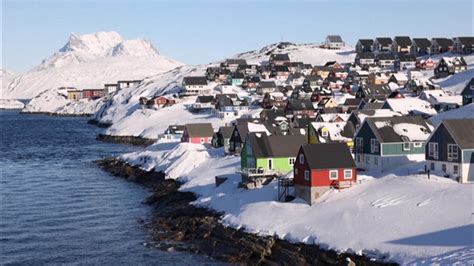
About 56,000 people live there. Many are Inuit. Many live in small coastal towns and settlements. Daily life is shaped by distance, weather, and sea. Fishing is a big part of the economy. Public services matter a lot, because the cost of living and transport can be high.
So when outside powers talk about “acquiring” Greenland, it lands as something personal. It is not just policy. It is identity.
That is why Nielsen’s words mattered. He did not only speak as a politician. He spoke as a steward of a people’s self-rule and dignity. In other words, he framed this as a rights issue, not a bargaining issue.
How Greenland fits with Denmark, in plain terms
Greenland is part of the Kingdom of Denmark, but it runs many of its own affairs. Greenland has self-government. It has its own parliament and government. It controls many domestic policy areas.
Denmark still handles certain key areas. Foreign affairs and defense sit in that shared space, with Denmark holding major constitutional powers. But Greenland has growing authority and a strong voice, especially on issues that directly affect Greenland.
There is also money. Denmark provides an annual block grant that supports Greenland’s public budget. That grant is a big part of how Greenland funds services like schools, health care, and infrastructure. This is one reason Greenland’s path to full independence is complex. Many Greenlanders support more independence over time. At the same time, economic reality is real.
So Greenland is not “Denmark’s colony,” and it is not an independent state either. It is self-governing, with deep ties to Denmark, and with a long-running independence debate inside its own politics.
That is why outside talk of “taking” Greenland hits multiple layers at once. It presses on Greenland’s identity. It presses on Denmark’s sovereignty. It presses on the legal order that keeps borders stable.
Why the U.S. cares so much about Greenland
To understand the U.S. pressure, we need to name the drivers. There are three big ones: security, geography, and resources.
Security: the U.S. already has a major foothold
The United States already has a military presence in Greenland. The key site is Pituffik Space Base, formerly called Thule Air Base. It sits in northern Greenland. It is tied to missile warning, space surveillance, and defense missions.
This base matters because of where it is. The Arctic is the short path between North America and Russia. In a crisis, early warning systems in the far north can matter a lot. The base is also part of a long-standing defense framework between the U.S. and Denmark.
So the U.S. does not need to own Greenland to have a defense presence there. It already has one. Still, in a world of rising great power rivalry, some U.S. leaders want more control, more certainty, and fewer political limits.
Geography: the Arctic is opening up
Climate change is reshaping the Arctic. Ice patterns are changing. Sea routes that were once blocked for much of the year are becoming more usable in certain seasons.
That does not mean the Arctic is suddenly easy. It is still dangerous. It still has limited ports, limited rescue capacity, and harsh conditions. But the trendline matters. More ships, more planning, more competition.
When trade routes shift, strategy shifts. When strategy shifts, Greenland becomes even more valuable. That is the cold reality.
Resources: minerals, energy, and supply chains
Greenland is often described as mineral-rich. The island has deposits that could matter for global supply chains, including minerals tied to modern tech and energy systems.
Mining in Greenland is not simple. Projects face cost, climate, local impact concerns, and politics. But even the possibility changes how big powers look at the place. It becomes a prize in the imagination, even before it becomes a prize in practice.
So when Trump says Greenland is essential to U.S. security, he is tapping into a broader Arctic storyline. He is also tapping into the idea that minerals and territory equal strength.
Why Greenland keeps saying no
Greenland’s “no” is not a single no. It has several reasons.
Self-determination is the core
Greenland wants to choose its own future. That is the heart of Nielsen’s statement. Greenland belongs to Greenlanders.
Even Greenlanders who want independence from Denmark do not usually mean “join the United States.” Those are not the same idea. One is about building a Greenlandic state. The other is about swapping one outside power for another.
So Greenland’s pushback is not only about Trump. It is also about preserving the idea that Greenland’s future is not for outsiders to trade.
Trust and respect matter more than rhetoric
Greenlandic leaders have said they want cooperation with the U.S. That includes business, security, and research. But the tone matters.
When U.S. leaders talk about acquisition, it creates uncertainty. It can feel like pressure, not partnership. It can also inflame local worries about culture and control.
In other words, the U.S. can gain influence in Greenland through respectful partnership. But it can lose goodwill fast through aggressive talk.
Daily life is not a chessboard
This is easy to miss. Greenland is often treated like a strategic square on a board. But there are schools, hospitals, housing shortages, job needs, and infrastructure challenges.
If geopolitics turns Greenland into a permanent tug-of-war, it can distort local priorities. It can also drain political energy. People feel that. Leaders feel that too.
So a firm “no” is also a way to protect local space to govern local issues.
Denmark’s dilemma, and why NATO feels the heat
Denmark is a U.S. ally. Denmark is also responsible for the unity of the realm that includes Greenland. That puts Denmark in a tight spot.
On one hand, Denmark wants strong ties with the U.S. On the other hand, Denmark cannot accept talk that undermines sovereignty. If Denmark looks weak on this, it risks domestic backlash and regional distrust. If Denmark overreacts, it risks a deeper rift with a major ally.
This is why diplomatic moves like summoning an ambassador matter. They are signals. They are also pressure valves.
NATO also feels the strain. Greenland sits in a strategic Arctic zone. NATO has interest in stability there. When one ally appears to threaten another ally’s territorial integrity, it shakes confidence. Even if it is “just talk,” it is talk with consequences.
After more than a decade of rising Arctic competition, alliance unity matters. So the Greenland issue becomes bigger than Greenland. It becomes a when to plant strawberries in alabama test of rules.
What a “special envoy” can do, and what it can’t do
A special envoy is not a magic wand. It is a diplomatic role. It can help coordinate policy. It can signal focus. It can also be used to apply pressure, softly or loudly.
But an envoy cannot rewrite international law. An envoy cannot buy a territory without consent. An envoy cannot erase Greenland’s self-rule.
So the role is symbolic and practical at the same time.
Symbolic, because it says the U.S. wants a direct channel and a direct push.
Practical, because it can shape meetings, messaging, and deals.
That is why Greenland reacted fast. Greenland wants to define the frame early. Greenland wants to keep the conversation on respect and consent, not on ownership.
The real stakes for the Arctic, in human terms
We often talk about the Arctic like it is empty. It is not empty.
There are Indigenous communities across the Arctic. There are local economies tied to fish, hunting, and growing tourism. There are environmental systems that are already under stress.
More big power competition can bring some benefits, like investment and jobs. But it can also bring risks, like environmental harm, cultural strain, and political pressure.
So the stakes are not only military. They are also social and ecological.
Greenland’s leaders are trying to hold both truths at once. They want partners. They also want control over their own story.
What happens next, if everyone stays serious
This situation can go a few ways.
One path is escalation. More heated statements. More diplomatic friction. More headlines. That path helps almost no one on the ground.
Another path is a reset in tone. The U.S. can keep focusing on Arctic security without pushing ownership language. Denmark and Greenland can keep cooperating on defense agreements and investment, while also drawing clear boundaries.
A third path is slow drift. The envoy role exists, but it does not produce big change. Greenland continues its independence debate. Denmark continues to balance alliance ties and sovereignty. The Arctic continues to warm, and competition continues to grow.
No matter which path happens, one thing is clear. Greenland is not a passive actor. Greenland is speaking for itself. That is the story inside the story.
A line drawn in ice and law
Nielsen’s message was not complicated. It did not need to be.
Greenland belongs to Greenlanders. Borders matter. Respect matters.
Those words are simple. They are also heavy.
They tell the world that Greenland will not be treated like a commodity. They tell allies that partnership must come with dignity. They tell big powers that the Arctic is not a free-for-all.
And for the people who live there, they say something even more basic.
We are here. We decide.