We want espresso at home, but we do not want a huge machine taking over the counter. The GEVI ECMG0 is built for that middle ground. It is slim, simple to learn, and made for espresso, lattes, and cappuccinos.
This is a semi-automatic machine. We still grind, dose, tamp, and lock in the portafilter. The machine then handles the pump and brew cycle. That gives us some control without making every morning feel like a class.
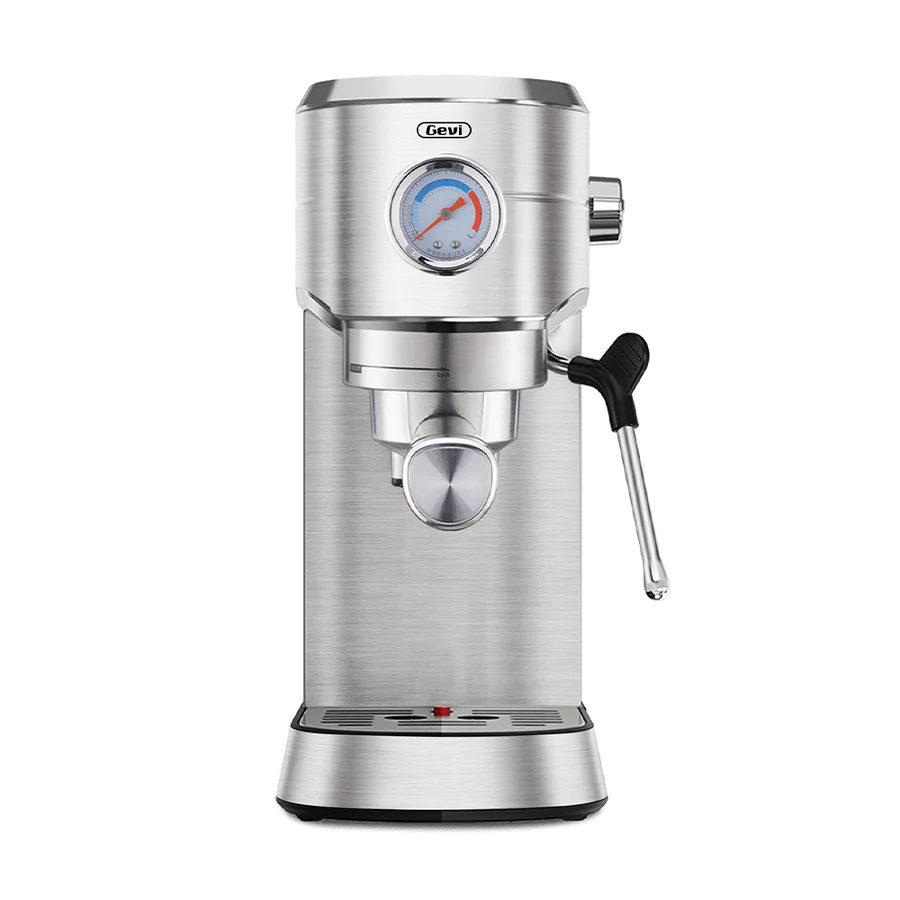
What the GEVI ECMG0 is
The ECMG0 is a compact espresso maker with a milk frother. It uses a 51 mm portafilter and a 34-ounce water tank. Its narrow body is the main draw for a small kitchen.
If you are comparing GEVI models, our GEVI ECME0 guide gives another compact option to compare.
The features that matter most
20-bar pump
GEVI lists a 20-bar pump. The large number sounds impressive, but the cup still depends on grind, dose, tamp, heat, and flow. In daily use, steady results matter more than chasing the biggest pressure number.
Pre-infusion
Pre-infusion wets the coffee before full brewing starts. That can help the puck soak more evenly. It may also make a shot easier to tune when the grind is close but not perfect.
Pressure gauge
The front gauge gives fast feedback. If pressure stays low, the grind may be too coarse or the puck may be too loose. If it climbs too high, the grind may be too fine or the basket may be too full.
For a different GEVI layout, the GEVI ECMD0 espresso machine is worth comparing before you buy.
Milk frothing for lattes and cappuccinos
The milk system is one of the best reasons to choose this machine over a plain coffee maker. You can make a latte, cappuccino, or other milk drink without adding a second appliance.
Start with cold milk. Add air near the start, then keep the milk moving as it warms. Stop before it gets too hot. Sweet, smooth milk is better than milk that tastes cooked.
The Specialty Coffee Association Coffee Skills Program treats espresso, milk texture, cleaning, and repeatable workflow as core barista skills. That is a good reminder that technique matters as much as the machine.
A simple first-day setup
Rinse the water tank before the first drink. Fill it with fresh water. Run one or two brew cycles with no coffee. Then run a short steam burst and wipe the wand.
- Rinse and fill the tank.
- Run a plain-water brew cycle.
- Run a short steam burst.
- Wipe the steam wand.
- Run one more quick rinse.
That small routine clears dust and stale water from the system before the first shot.
How to get a better espresso shot
Fresh beans help. A steady dose helps too. Most bad shots can be improved by changing one thing at a time.
If the shot runs too fast
Try a finer grind. Make sure the coffee is level before you tamp. You can also check that you are using enough coffee for the basket.
If the shot runs too slow
Try a slightly coarser grind. Check for too much coffee in the basket. Keep the tamp level instead of pressing harder and harder.
Keep the recipe steady
Once a shot tastes good, repeat the same dose and grind. Small notes can save a lot of guesswork. An espresso scale can help if you want a simple way to track coffee and shot weight.
Small tools that make the routine easier
You do not need a counter full of gear. A decent grinder, a clean towel, and a milk pitcher cover most daily needs. A small stainless milk frothing pitcher is useful if milk drinks are part of your routine.
If you want another practical take on home espresso gear, this GEVI espresso machine review from Noah’s Outdoors looks at a related model from a simple, real-use point of view.
Cleaning is part of good coffee
Old coffee oil and dried milk can ruin a good drink. Daily care is fast when we do it right away.
- Knock out the puck after each shot.
- Rinse the basket and portafilter.
- Run a short water flush.
- Wipe and purge the steam wand after milk.
- Empty the drip tray before it gets full.
Descale the machine when your water and the manual call for it. Hard water leaves scale faster than soft water.
How it fits on a small counter
GEVI lists the machine at about 5.5 inches wide. That slim shape is useful in apartments, small kitchens, offices, and other tight spaces.
If espresso feels like too much work for some mornings, our GEVI 12-cup drip coffee maker review covers a simpler batch-brew option.
Who the GEVI ECMG0 fits best
This machine makes the most sense for someone who wants café-style drinks but has limited space. It also fits people who enjoy a little hands-on control without moving into high-end espresso gear.
- Small kitchens and tight counters.
- Latte and cappuccino drinkers.
- Beginners who want to learn espresso.
- Homes that want both espresso and milk drinks.
It is less ideal for someone who wants one-button coffee with no cleanup. Espresso still asks for a little work.
A compact machine with room to learn
The GEVI ECMG0 keeps the home espresso routine small and clear. We grind, tamp, brew, froth, and clean. The gauge helps us learn. The narrow body saves space. The milk system gives us more drink choices.
That is the real appeal. It does not need to turn coffee into a hobby. It simply gives us a way to make a better cup at home and improve a little with each shot.