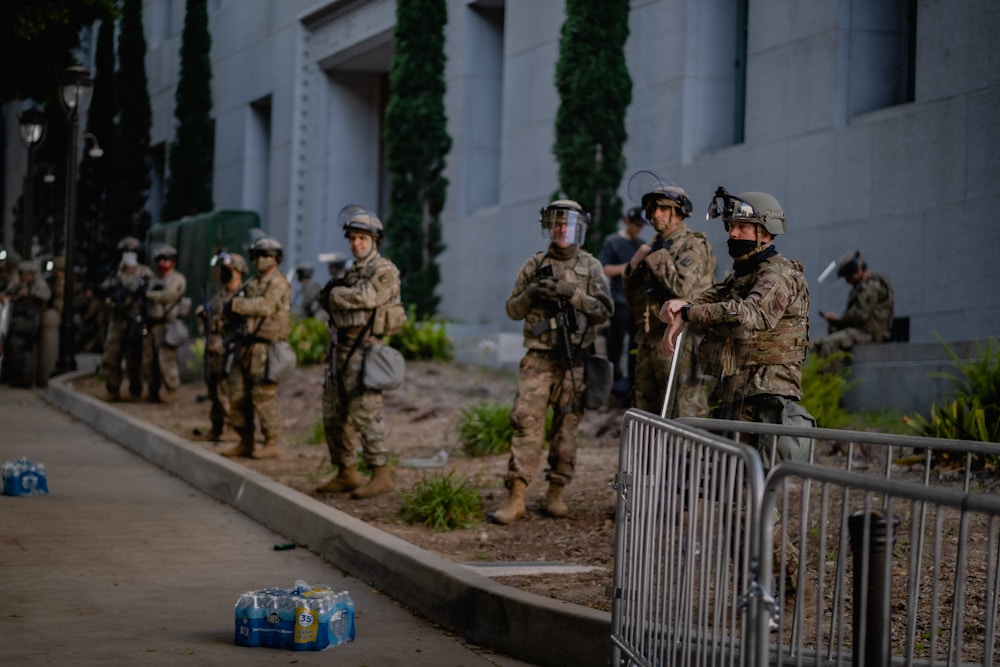
On Wednesday, President Donald Trump said he is pulling back, for now, from his push to deploy National Guard troops in Chicago, Los Angeles, and Portland, Oregon. He framed it as a pause, not a full stop. He also warned that troops could return later “in a much different and stronger form” if crime rises again.
This shift comes after a string of legal blocks that slowed the plan and, in key places, stopped it outright. In simple terms, When December SAT Scores Come Out courts told the administration it could not do what it was trying to do, at least not the way it was doing it.
Even before this announcement, the Guard was not doing what many people imagine when they hear “troops deployed.” In Chicago and Portland, Guard members were not out on the streets, as legal challenges played out. The fight was happening in courtrooms, not in neighborhoods.
What we are watching is bigger than one decision on one day. It is a test of power. It is a test of limits. And it is a test of trust between Washington, governors, mayors, and the public.
What Trump Announced and What It Changes
Trump’s message was blunt. He said he is stepping back from these deployments for now, and he tied that pause to legal roadblocks. At the same time, he used the moment to restate his view that tough federal action is needed when cities struggle with crime and disorder.
This announcement matters for three reasons.
First, it signals that the legal fights are shaping policy in real time. In other words, the courtroom is not just reviewing the plan after the fact. It is shaping what can happen next.
Second, it shows how hard it is to use the National Guard in a major U.S. city without deep cooperation from state leaders. Many of those leaders, in these cases, did not want the Guard brought in this way.
Third, it resets the political story. For months, the administration argued the Guard was needed. Now it is saying the Guard can leave, at least for now, even while insisting the threat remains.
Why the Courts Became the Main Roadblock
The key issue was not only public safety. It was also authority.
The National Guard sits in a special place in American life. Most of the time, Guard units belong to the states. Governors are the top leaders of their Guard forces. The federal government can sometimes take control, but the law sets limits, and courts can review whether those limits were followed.
In this case, courts pushed back Stores Open on Thanksgiving Day.
In Illinois, the legal fight rose to the U.S. Supreme Court. The Court declined to help the administration keep its plan moving while the case continues, leaving in place a lower court ruling that blocked the deployment effort there.
In California, a judge ordered the administration to end the Guard deployment connected to Los Angeles. That ruling was a major public defeat for the plan, because Los Angeles was the most visible stage for it.
In Oregon, state and local leaders also went to court over the federal effort tied to Portland, and the legal arguments focused on whether the law’s strict conditions were met.
So the pattern was clear. The administration tried to move fast. The cities and states sued. Judges slowed the plan. And the pause Trump announced followed those setbacks.
A Simple Way to Understand the National Guard Power Struggle
It helps to think of the Guard like a shared tool kept in a state’s garage.
Most days, the governor holds the keys. The Guard helps with storms, floods, fires, and other emergencies. Sometimes the Guard helps with big public events. Sometimes it supports law enforcement in limited ways.
But in rare cases, the federal government can take the keys. That step has to match a law that allows it. And when leaders disagree, courts can step in to decide whether the federal government really had the right to grab those keys.
That is what happened here.
Trump’s plan ran into a basic American design. Our system splits power on purpose. Local leaders run local policing. Governors control state forces most of the time. The federal government can act, but it has to act within the rules.
What Was Different About This Push
Guard deployments inside U.S. cities are not new. We have seen them after riots, after disasters, and after major national events.
What made this moment different was the mix of goals Begonia masoniana ‘Iron Cross’ and the level of conflict.
The administration said the deployments were part of a broader crackdown tied to crime, protests, and immigration issues. Local and state Democratic leaders argued it was federal overreach and political theater.
Instead of one clear emergency, we saw a long, hot argument over what counts as an emergency in the first place.
And most of all, we saw legal challenges moving faster than the policy could settle.
Chicago: A Deployment That Never Became Street Presence
In Chicago, the story turned into a legal standoff.
Trump’s effort faced court action that blocked the plan while the case moves forward. The Supreme Court’s move left that block in place for now.
Because of that, the Guard was not out in the city doing patrols. The dispute stayed in the legal lane.
Chicago’s local leadership also pushed back on the need for a federal Guard presence. City officials pointed to crime trends they say were improving under local strategies, and they rejected the idea that outside troops were the answer.
So the “deployment” became something closer to a symbol than a street-level operation.
Los Angeles: The Most Visible Front and the Sharpest Clash
Los Angeles was different.
It became the center of a high-profile fight between the administration and California leaders. California officials argued that the federal use of the Guard was unlawful in the way it was carried out. A judge ordered the administration to end the Guard deployment there.
Trump and his allies claimed the federal presence helped reduce crime. California leaders rejected that claim and argued the deployment was intimidation, Begonia orococo not effective policy.
This split matters because it shows two very different stories about public safety.
One story says force and visibility bring order.
The other story says good policing is local, slow, and based on relationships. It says outside force can make things worse.
When a judge orders the deployment to end, it does not settle that argument in the public mind. But it does settle what the government can do right now.
Portland: A City With Long Memory and Fast Lawsuits
Portland has been a flashpoint in past national debates about protests and federal action. That history shaped how quickly leaders moved to fight the plan.
Legal filings in Oregon focused on whether the legal requirements for federalizing and deploying the Guard were truly met.
Trump’s new message included the idea that the Guard was being removed from Portland, even though the troops were not out on the streets there as the court fight played out.
In other words, Portland showed how the legal system can prevent a show of force from becoming a real one.
The Crime Argument and the “Only a Question of Time” Claim
Trump’s post tied the pause to an expectation that crime will rise again. That framing is important because it keeps the door open for a return.
Still, crime claims are tricky in public debate. Crime can rise in one area and fall in another. It can fall for months and then spike. It also depends on what is measured, how it is reported, and how it is explained.
Local leaders in these cities argued that crime trends were moving in the right direction due to local work, not because of a federal Guard plan that was tied up in court.
This is where the public can feel stuck.
When leaders fight, people want safety now. People want simple answers. But safety is rarely simple. It is often slow, steady work that does not fit neatly into a headline.
What the Law Really Guards
This fight was never only about boots and uniforms. It was also about the guardrails of the system.
When courts push back, they are not saying public safety does not matter. They are saying that power must follow the law.
That is the core point.
If a president can deploy state Guard forces into a state over a governor’s Begonia thelmae objection without meeting strict legal rules, the balance shifts in a big way. If a president cannot do that except in narrow cases, then governors keep the keys in most situations.
After more than two centuries of American government, this balance is still being tested, often in moments of stress.
What Happens Next in Practical Terms
Trump called this a pause. That means the next chapter depends on three moving parts.
Courts and Appeals Keep Moving
Cases like these rarely end fast. Orders get appealed. Emergency requests get filed. Higher courts weigh in, sometimes narrowly, sometimes strongly.
So even if troops are being pulled back, the legal issues may keep going, because the bigger question is about authority in the future.
Cities Keep Preparing for Federal Pressure
Even without troops on the streets, cities and states now know what a future push could look like. They also know how fast lawsuits may need to move.
This means legal teams will stay ready. Public statements will stay sharp. And local leaders will likely keep building arguments that their own safety plans are working.
Politics Will Keep Framing the Same Story Two Ways
Trump can say he tried to act and was blocked.
Democratic leaders can say they stopped unlawful federal action.
Both sides can tell their base they “won” something.
That is why this pause may not cool the temperature much. It may simply shift where the fight happens next.
What This Moment Says About Trust
There is one more layer that matters, even if it is harder to measure.
Trust.
When people see troops discussed as a tool for everyday public safety, some feel safer. Others feel threatened. Some feel both at once.
Trust is also shaped by who is asked Begonia, Candy Stripes and who is ignored.
If local leaders say no and federal leaders push anyway, residents can read that as strength or as disrespect. If courts step in, residents can read that as protection or as obstruction.
But most of all, trust grows when people see real results.
Safe streets. Fair policing. Faster emergency response. Better mental health support. Strong schools. Real jobs.
Those things take time. They also take teamwork between levels of government, not just fights for the microphone.
Where This Leaves Us Next
Trump’s decision to step back from Chicago, Los Angeles, and Portland does not end the debate. It shows where the pressure points are.
Courts can slow federal action.
Governors still hold strong power over their Guard forces in many cases.
Cities remain the stage where national leaders try to prove they can deliver safety.
And we are left with a truth that is not exciting but is real. Public safety is not one lever. It is many levers pulled at once, over and over, day after day.