We all want the same thing in the morning. A good drink. A smooth start. Less mess.
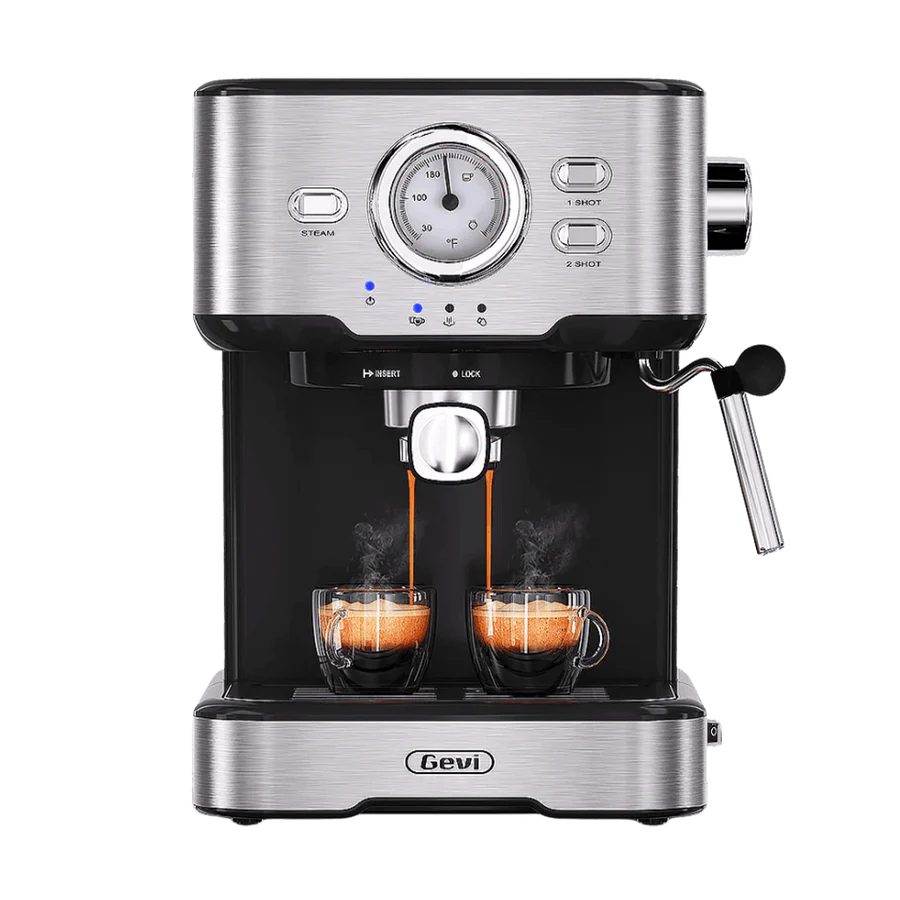
That is where the GEVI 2-in-1 Espresso Machine ECMD0 fits in. It is a compact espresso machine with a steam wand for milk. It also leans on dual temperature control and a visual thermometer so we can stay in a good range for espresso and milk.
This kind of machine is not trying to be a full café. It is trying to be the smart middle. It helps us make espresso drinks at home, with steps we can learn fast.
So let’s break it down in a simple way. What it is. What it does well. What it needs from us. And how we can get better drinks, one small tweak at a time.
What “2-in-1” means here
“2-in-1” is plain. It means we can do two big jobs with one machine:
- pull espresso shots
- steam milk with a wand
That combo covers most home favorites:
- espresso
- latte
- cappuccino
- iced milk drinks with espresso poured on top
The ECMD0 is listed as semi-automatic. That means we still do the hands-on parts like dosing and tamping. Then the machine does the pump work for the shot.
This style is a sweet spot for many homes. We get control, but we do not need a huge setup.
The headline features we feel every day
A product list can look long. Daily life is short. These are the features we notice the most.
A visual thermometer that shows real-time feedback
GEVI highlights a visual thermometer display. It is meant to give quick temperature feedback while we brew and steam.
This matters because espresso is picky. Milk is picky too. Heat changes taste. Heat changes texture.
Dual temperature targets for espresso and milk
GEVI calls out 197°F for espresso extraction and 212°F for milk foam. It also mentions NTC control to stay in a desired temperature range.
Even if we never talk in degrees, we feel the result. Shots taste more steady. Milk foam feels more repeatable.
A 20 bar pump
The page states an Italy-origin 20 bar pump and talks about consistent pressure for extraction.
Here is the simple truth: cafés often brew around 9 bar at the coffee puck. That is the common “gold standard” range people point to for classic espresso. 2026 Money Reset That Feels Calm — Budget, Bills, Debt, and Savings.
So why do many home machines say 15, 19, or 20 bar. It is mostly marketing plus headroom. The key is not the biggest number. The key is steady pressure during the shot.
One-shot and two-shot buttons
The machine offers 1 shot and 2 shot options. It also notes we can customize the amount of espresso instead of being stuck with defaults.
That is practical. We can brew short for strong drinks. We can brew longer for a bigger cup.
Specs that help us plan counter space
These details help us know if it fits our kitchen and our habits.
- 51mm portafilter
- 1.5 liter removable water tank
- 1100W, 120V/60Hz
- 10.4 lbs
- 12.2″ D x 10.4″ W x 13.3″ H
- stainless steel material (as listed on the page)
It also has a cup warming plate, a two-level cup holder, and a detachable drip tray.
Those small things add up. A warm cup helps keep espresso hot. A taller space helps mugs fit. A drip tray that pops out makes cleanup easier.
What comes in the box
Getting started is easier when the basics are included.
GEVI lists these items in the box:
- espresso machine with milk frother
- instruction manual
- 1.5L removable water tank
- 51mm double cup filter
- 51mm portafilter
- steam wand cleaning pin
- spoon and tamper
That cleaning pin is a real win. Steam wands can clog. A pin helps keep the tip clear.
A simple setup that feels calm
We do better coffee when we start clean. A first setup routine keeps odd tastes away.
A simple day-one flow looks like this:
- rinse the water tank
- run water through the group head with no coffee
- wipe the steam wand
- do one short steam burst into an empty cup, then wipe again
This helps flush out factory dust and shipping smell.
Then we are ready for coffee.
The 5-step daily routine GEVI shows
GEVI lays out a short path from setup to cleanup:
- fill water tank
- add grounds to the filter and tamp
- install portafilter and press 1/2 shot button
- enjoy coffee
- press 1/2 shot button again to clean the group head
That last part is a big deal. High-Yield Savings Accounts in Plain Words — How We Pick One and Use It Right. A quick rinse after a shot can reduce old coffee oils in the machine.
Old oils taste stale. Fresh tastes clean.
Getting a better espresso shot at home
Espresso can feel hard. It gets easier when we focus on four basics:
- coffee freshness
- grind size
- dose
- tamp
The machine helps with heat and pressure. We handle the coffee puck.
Coffee freshness matters more than we think
Fresh coffee smells alive. Old coffee smells flat.
When coffee is flat, crema is thin. Flavor is dull. That is true on any machine.
Grind size sets the flow
Espresso uses a fine grind. If it is too coarse, water rushes through and tastes weak. If it is too fine, water struggles and tastes bitter.
We do not need perfect. We need “close.” Then we adjust.
Dose and tamp make the puck stable
A stable puck helps water flow in a clean, even way.
- fill the basket with a steady dose
- level it
- tamp it flat
That simple routine cuts down on messy flow.
About that 51mm basket size
A 51mm portafilter is a common home size. It can still make a strong, tasty shot.
The main difference we feel is workflow. A smaller basket can be a bit deeper. That can change how we tamp and how we dial grind. It is still very workable.
Dual-wall baskets and why they help beginners
Many home machines pair well with dual-wall (pressurized) baskets. GEVI sells a 51mm dual wall filter as a compatible accessory.
A pressurized basket is built to create back pressure in the basket itself. It helps make shots more forgiving. That is useful when we use:
- pre-ground coffee
- a basic grinder
- coffee that is not super fresh
Breville’s explainer describes how a dual-wall basket has an inner and outer wall, Begonia Granada and the outer wall often has one small exit hole to help create back pressure.
So the cup can look nicer sooner. More crema. Less chaos.
It does not replace a great grinder. But it helps us get good drinks faster.
Why temperature talk is not just nerd stuff
Heat changes what we taste.
A common “good zone” for brewing water is about 195°F to 205°F. This range shows up often in coffee standards and guidance.
GEVI leans into this idea with its temperature focus and thermometer display.
We do not need to stare at the gauge. We just need to know the machine is built to stay in a useful range.
That helps day-to-day consistency.
Milk steaming that tastes sweet, not burnt
Milk is simple. Heat it. Add air. Make it silky.
It becomes hard when we overheat it.
A common target range for steamed milk is often around 150°F to 160°F for many drinks. Going too hot can dull sweetness and change texture.
So we aim for a feel, not a number:
- the pitcher feels warm
- then hot
- then too hot to hold for long
Stop before “too hot.”
A basic wand routine that works
This is a simple path to microfoam:
- start with cold milk
- purge the wand for a second
- tip the wand just under the surface to add air
- lower the tip a bit to spin the milk
- stop when the milk is hot and glossy
- wipe the wand and purge again
That wipe-and-purge step keeps the wand clean. It also cuts down on clogs.
The drinks we can make on day one
With espresso plus a steam wand, we can do a lot.
Espresso
A short shot in a warm cup. Clean. Strong.
Americano
Espresso plus hot water. Smooth. Easy to sip.
Latte
Espresso plus lots of steamed milk. Soft texture. Mild bite.
Cappuccino
Espresso plus milk foam with more air. Light. Fluffy top.
Iced latte
Espresso over ice and cold milk. No steaming needed.
A workflow that feels fast on busy mornings
Speed is not only about the pump. It is about steps.
A simple “fast” workflow looks like this:
- fill the tank once for the morning
- pre-warm the cup on the warming plate
- dose and tamp while the machine heats
- pull the shot
- steam milk right after
- quick rinse cycle
- wipe the wand
This keeps the counter clean. It also keeps the Bougainvillea Key West White drink hot.
Cleaning that keeps taste clean
Espresso machines live in two worlds:
- coffee oils
- mineral scale
Both matter.
The quick daily clean
GEVI suggests pressing the shot button again to clean the group head.
Daily basics help a lot:
- knock out the puck
- rinse the basket
- run a short water flush
- wipe the shower area if needed
- wipe and purge the steam wand
Descaling when water is hard
Scale builds up inside machines that heat water.
A common home method uses vinegar or citric acid, then a full flush of clean water.
One espresso service guide notes using either straight white vinegar or a citric acid mix, and it stresses flushing well after descaling.
If we use a branded descaler, we follow that label. If we use a home mix, we keep it mild and rinse a lot.
Clean water paths help shots taste bright instead of dull.
Small design choices that make life easier
These parts sound minor. They matter a lot after a month of use.
Two-level cup holder
It helps us fit small cups close to the spouts and fit taller cups when we need them.
Removable tank
A 1.5L removable tank is roomy for a home machine. It also makes refill easy at the sink.
Detachable drip tray
It catches mess. It also pops out for cleaning.
Cup warming plate
Espresso cools fast. A warm cup helps the shot stay hot longer.
What “20 bar” means in real home use
The best way to think about pump bars is like this:
- the pump rating shows what the pump can do
- the coffee puck decides what happens in the cup
In classic espresso talk, many people point to around 9 bar at the puck as a common standard. The SCA’s espresso survey work shows many Caladium Freida Hemple baristas cluster around that area.
So a 20 bar pump rating is not a promise that every shot runs at 20 bar. It is more like capacity. The real goal is stable pressure during the brew.
That is what helps taste.
Who this machine fits best
The ECMD0 tends to fit people who want:
- real espresso drinks at home
- a steam wand for milk
- a smaller machine that still feels solid
- a simple shot routine we can learn
It also fits shared homes. One person can pull espresso. Another can steam milk. Then we all get our own drink.
A smooth path to better coffee, one small tweak at a time
We do not need to change ten things at once.
One change per week is plenty:
- week one: dose and tamp the same way each time
- week two: adjust grind a little for better flow
- week three: steam milk a bit cooler for sweeter taste
- week four: keep a stricter clean routine
That is how home espresso gets fun. It becomes a rhythm. Not a chore.
Crema, foam, and that “café feel” at home
A home espresso station is not only taste. It is also the moment.
A thick crema layer. A glossy milk swirl. A warm mug in our hands.
The ECMD0 is built to support that moment with:
- temperature feedback
- shot buttons
- a steam wand
- a practical set of included tools
It keeps the steps clear. It keeps the setup simple.
And it gives us space to grow.
Steam, Steel, and Small Daily Rituals
Some mornings are loud. Some are quiet. Coffee still happens.
We pull a shot. We steam milk. We wipe the wand. We take the first sip.
That small routine can change the feel of a whole day.