Rockefeller Center sits right in the middle of Midtown Manhattan, and it feels like its own small city inside the larger one. Tall Art Deco towers rise above a plaza full of flags, fountains, and people on the move. In winter, the famous Christmas tree and ice rink glow under the lights. In warmer months, the same space turns into an open-air dining and gathering spot.
In other words, this is not just one building. It is a full complex that pulls together art, business, media, and street life in one tight grid of blocks. When we walk through it, we step into almost a century of New York history and culture at once.
A Quick Look at What Rockefeller Center Is
Rockefeller Center is a group of buildings in Midtown Manhattan, between Fifth and Sixth Avenues and roughly from 48th to 51st Street. The centerpiece is 30 Rockefeller Plaza, a 66-story Art Deco skyscraper that opened in 1933 and now carries the official name Comcast Building, though most people still say “30 Rock.” It holds NBC studios, offices, and the Top of the Rock observation deck high above the streets.
Around this tower, smaller buildings form a neat urban canyon. The central sunken plaza sits just off Fifth Avenue. At street level we see shops, cafes, and entrances to offices. Below, the famous lower level holds the Rink and seasonal dining areas. Above, the open air channel between the buildings points straight toward St. Patrick’s Cathedral and the rest of Midtown.
Instead of acting like a closed office park, the complex stays open to the public all day. We can walk through plazas, sit by fountains, and use the space as a path from one side of Midtown to the other, even when we do not have tickets for any attraction.
From Great Depression Project to New York Icon
The story of Rockefeller Center reaches back to the early 1930s. During the Great Depression, John D. Rockefeller Jr. pushed ahead with plans to build a new commercial center on land once tied to Columbia University. Construction gave jobs to thousands of workers at a time when those jobs were badly needed.
The design team, led by architect Raymond Hood and other Associated Architects, created a unified complex of Art Deco buildings, plazas, and passageways. 30 Rockefeller Plaza rose as the main tower, with strong vertical lines and clean, modern shapes. Other buildings around it followed the same language, so the whole project felt like one single vision, not a random mix.
After morning work in nearby offices, people could step out into plazas filled with sculpture and murals. The developers built in public art and public space on purpose. The idea was simple and bold: a place where business, media, entertainment, and everyday city life would blend. That plan still shapes how we experience the Center today.
Art Deco Everywhere You Look
Rockefeller Center is one of the best places in the United States to feel Art Deco design in real life. The buildings use limestone, metal, and glass in sharp, clean shapes. Lines run straight up, pulling the eye toward the sky. Details stay simple but strong.
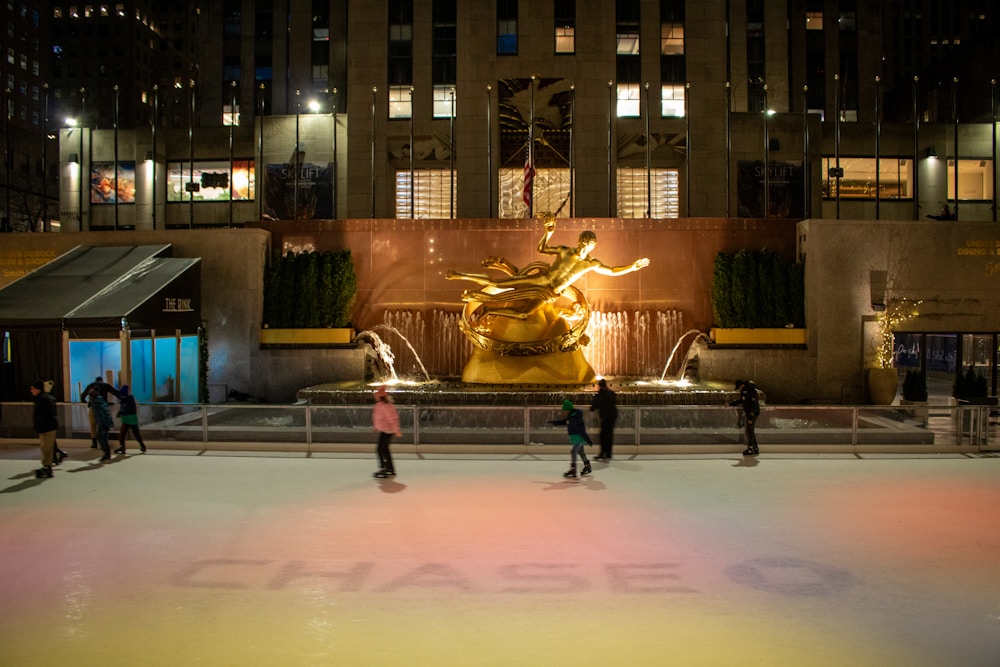
Public art fills the space. The golden Prometheus statue by Paul Manship watches over the main plaza and rink, set in front of a stone wall and fountain. At street level, the powerful Atlas statue holds a metal armillary sphere on his shoulders near St. Patrick’s Cathedral. Inside building lobbies, murals and carvings show themes of progress, communication, and human effort.
But most of all, the art feels woven into daily life instead of hidden away. Office workers eat lunch near Prometheus. Skaters glide under murals. Visitors pass through grand lobbies on the way to elevators and studios. The complex turns high design into something we touch with our own steps.
The Christmas Tree and Holiday Glow
For many people, Rockefeller Center means one thing first: the Christmas tree.
Each year, a giant Norway spruce is chosen from a town somewhere in the northeastern United States and brought to Manhattan. Recent trees stand around 75 feet tall and can weigh more than 10 tons. Crews cover the branches with over 50,000 multicolored LED lights and top the tree with a 900-pound Swarovski star.
The tree lighting ceremony usually takes place in early December and is broadcast live on national television. The 2025 lighting, for example, is scheduled for December 3, with NBC televsing a special event from the plaza. Once the lights turn on, the tree stays lit every evening through early or mid-January.
In other words, the tree acts like a beacon in the dark season. Crowds fill the streets around Fifth Avenue. Holiday windows at nearby stores shine. A visitor can stand at the edge of the plaza and see the tree, Prometheus, the rink, and the tall tower behind it, all lined up in one view.
Skating at the Rink
Just below the tree sits The Rink at Rockefeller Center, one of the most famous ice skating rinks in the world. It first opened in 1936 as a temporary attraction and became a permanent seasonal feature a few years later.
Today, the Rink usually opens in October and runs through late winter. The 89th season begins in mid-October 2025, with general admission sessions, skate rentals, and group rates. VIP packages offer longer skate times, lounge access, skate rentals, and even discounts at the gift shop.
Recent years added cozy Après Skate Chalets above the Rink. These small private spaces look out over the ice and the tree. A reservation covers a 40-minute block for a small group, along with digital photos and food and drink service from an on-site restaurant.
Instead of feeling like a giant stadium rink, this ice feels intimate. The space is not huge, so every glide passes near Prometheus and the crowd watching from above. Even people who do not skate enjoy standing at the rail to watch couples, families, and friends move under the lights.
Top of the Rock: Views Across the City
High above the plaza, the Top of the Rock Observation Deck sits on the upper floors of 30 Rockefeller Plaza. The deck first opened in the 1930s with an ocean-liner theme. Today, it offers indoor and outdoor viewing levels from the 67th to the 70th floors, about 850 feet above street level.
Top of the Rock stays open daily from 8:00 a.m. to midnight, with last entry a little after 11 p.m. Guests reach the deck through a dedicated entrance on West 50th Street. Elevators run up through lit shafts, and the experience now includes museum-style exhibits that share the story of the building and its role in media and culture.
Ticket options include general admission, faster-entry passes, and combo offers that link the deck with other attractions such as the Museum of Modern Art, St. Patrick’s Cathedral tours, or wider city passes. Seasonal extras appear too, like Santa photo packages or special tree-viewing experiences that give closer access to the plaza during the holidays.
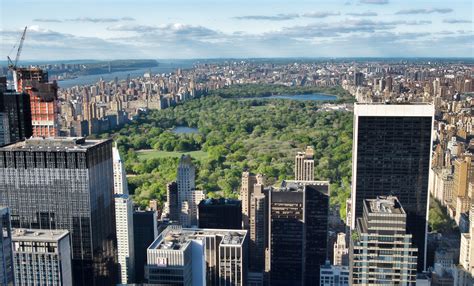
From the top, we see Central Park to the north, the Empire State Building to the south, and bridges, rivers, and towers all around. Glass panels ring the main outdoor deck so views stay clear while visitors stay safe. After morning clouds pass, sunsets often pour warm colors over the skyline, and nighttime visits reveal a grid of city lights in all directions.
Tours, Stories, and Studio Energy
Rockefeller Center offers guided tours that dig into history, architecture, and art around the complex. Regular tours run many times each day, and a shorter “Tour Jr.” gives younger visitors a version tuned to their level. The Rock Pass bundles a Center tour with Top of the Rock, so many guests learn the backstory first and then ride up to see the whole layout from above.
The complex has always tied closely to media. NBC studios sit inside 30 Rockefeller Plaza, and the building’s alternate names over the years—RCA Building, GE Building, Comcast Building—reflect the broadcast and technology companies that used it as a base. Saturday Night Live, morning shows, and other programs draw live audiences and give the tower a special energy, even for visitors who only see the studio entrances and crowds.
Recent changes also show how the Center keeps updating itself. Classic neon signs on 30 Rock are being replaced with eco-friendly LED versions while still keeping the original look as much as possible. Fans of old New York design worry about losing neon, but the shift sits inside a larger push toward energy efficiency that also includes the LED-lit tree and building signs.
Everyday Life Around the Plaza
Rockefeller Center is a big visitor draw, but it also works as a daily place for New Yorkers. Office workers use the plazas as outdoor lunch spots. Shoppers walk through to reach stores on Fifth Avenue. Families pause at the fountains in warmer months. Outdoor seating and seasonal plantings turn the sunken space into a kind of half-hidden courtyard when the ice is gone.
After morning rush hour fades, the complex settles into a steady flow of tours, deliveries, and casual visitors. Street performers sometimes appear along the edges. Seasonal pop-ups, art installations, and small markets fill open areas during parts of the year. In other words, the Center acts like a living stage where city life plays out in front of carefully designed stone and metal backdrops.
Planning Your Visit in a Simple Way
A visit can fit into many different kinds of trips. Some people come mainly for the tree and the Rink. Others treat Top of the Rock as their main goal. Many fold Rockefeller Center into a wider Midtown day that includes St. Patrick’s Cathedral, Fifth Avenue shops, Times Square, or Broadway.
Because the area sits in the middle of Manhattan, subway lines and buses reach it easily. The streets around the tree grow very crowded in December evenings, so earlier visits in the day or visits later in the season can feel calmer. In warmer months, walking through the plaza gives the same strong sense of place, just with flowers and cafe tables instead of ice.
Tickets for Top of the Rock and tours work best when bought ahead, especially during peak travel seasons. Official guidance notes that tickets can be changed or upgraded later, so we gain some flexibility if the weather shifts.
Accessibility information, directions, and current hours stay updated on the Center’s official channels, and combo passes help pair a visit with other major New York attractions. Instead of building a whole day around one ticket, we can think of Rockefeller Center as one strong anchor in a simple Midtown route.
Rockefeller Center Staying With You
A walk through Rockefeller Center blends stone, light, and movement into one clear picture. Art Deco towers climb into the sky. Statues and murals stand close to our hands. Skaters circle under a golden figure. The Christmas tree glows over crowds. High above it all, the Top of the Rock deck looks out across the city.
Over time, this place has held radio shows, news broadcasts, concerts, protests, quiet lunches, and late-night walks. It has added new lighting, new exhibits, and new ways to see the view while keeping the same basic shape it had in the 1930s.
When we leave, we carry more than a few photos. We carry the feel of a space where careful design and daily life meet. In other words, Rockefeller Center becomes part of how we picture New York itself: bright, layered, busy, and always ready to reinvent itself while its limestone walls stay right where they have always been.